
Overview
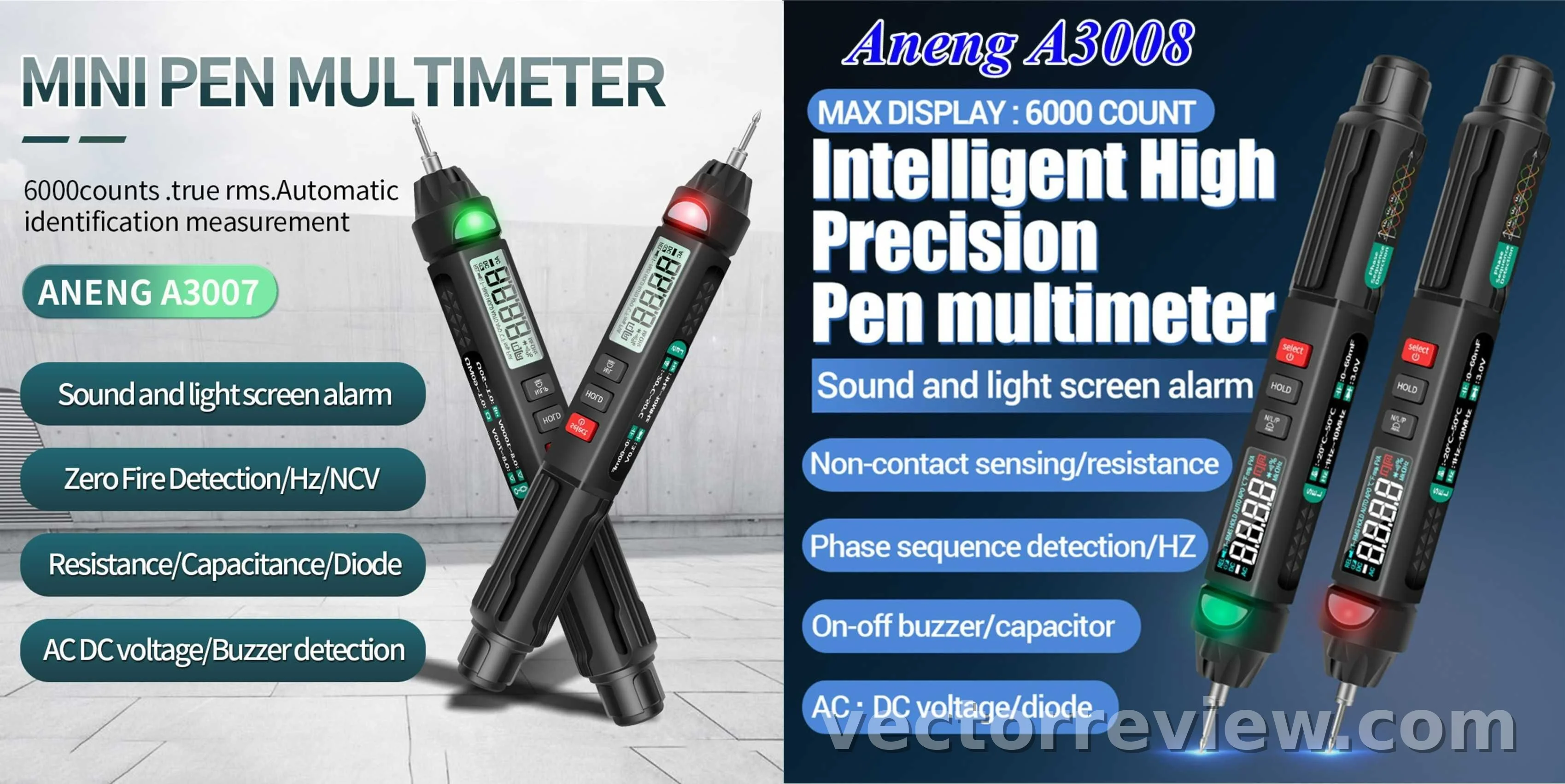
ANENG is a brand known for producing affordable test equipment, particularly pen-type digital multimeters that appeal to hobbyists, electricians, and DIY enthusiasts. The A3005 and A3006 are two popular models in their lineup, both offering compact, pen-style designs with automatic measurement capabilities. This review compares the two based on available specifications, user experiences, and reported performance.
What Are the ANENG A3005 and A3006?
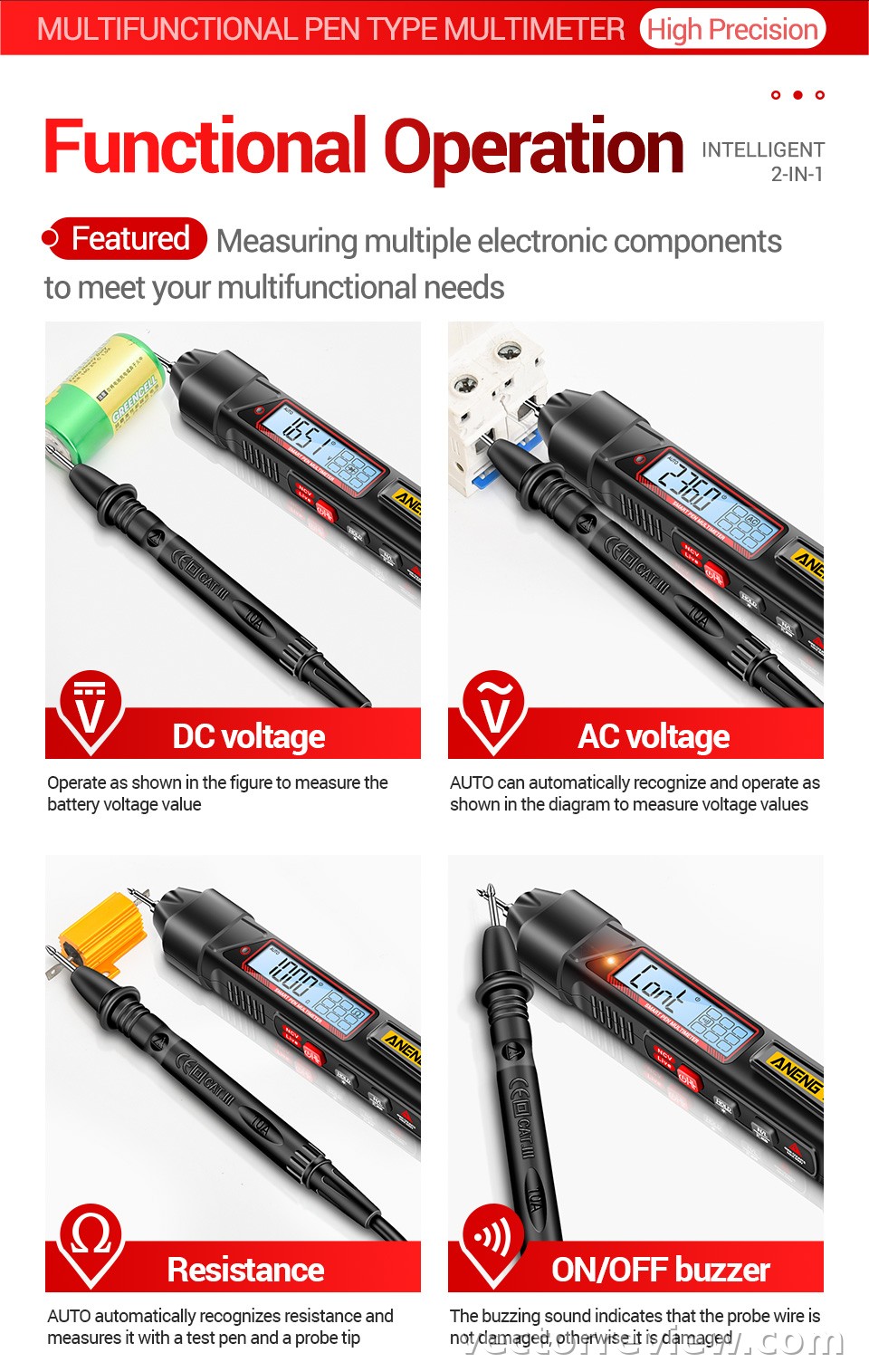
Both the A3005 and A3006 are pen-type digital multimeters designed for convenience and portability. They feature a slim form factor that fits easily in a pocket or tool bag, making them suitable for quick measurements in tight spaces. The A3005 is available in standard and Pro versions, while the A3006 is a slightly higher-end model with additional features.
ANENG A3005 Specifications
According to the manufacturer, the A3005 offers:
- Display: 4000 counts, digital LCD with backlight
- AC/DC Voltage: 4V, 40V, 600V
- Resistance: 4kΩ to 40MΩ
- Capacitance: Up to 40mF
- Frequency: Up to 10MHz
- Special Functions: NCV (non-contact voltage) induction, live/zero line detection, line breakpoint search, diode test, continuity buzzer, ambient temperature, data hold, auto power-off, flashlight
- Power: 2 x AAA batteries (not included)
- Dimensions: 184.5 x 25.7 x 29.2 mm
- Weight: 150g
The A3005 Pro variant includes similar specifications but may come with additional accessories such as gold-plated needle tips, alligator clips, and various adapters.
ANENG A3006 Specifications
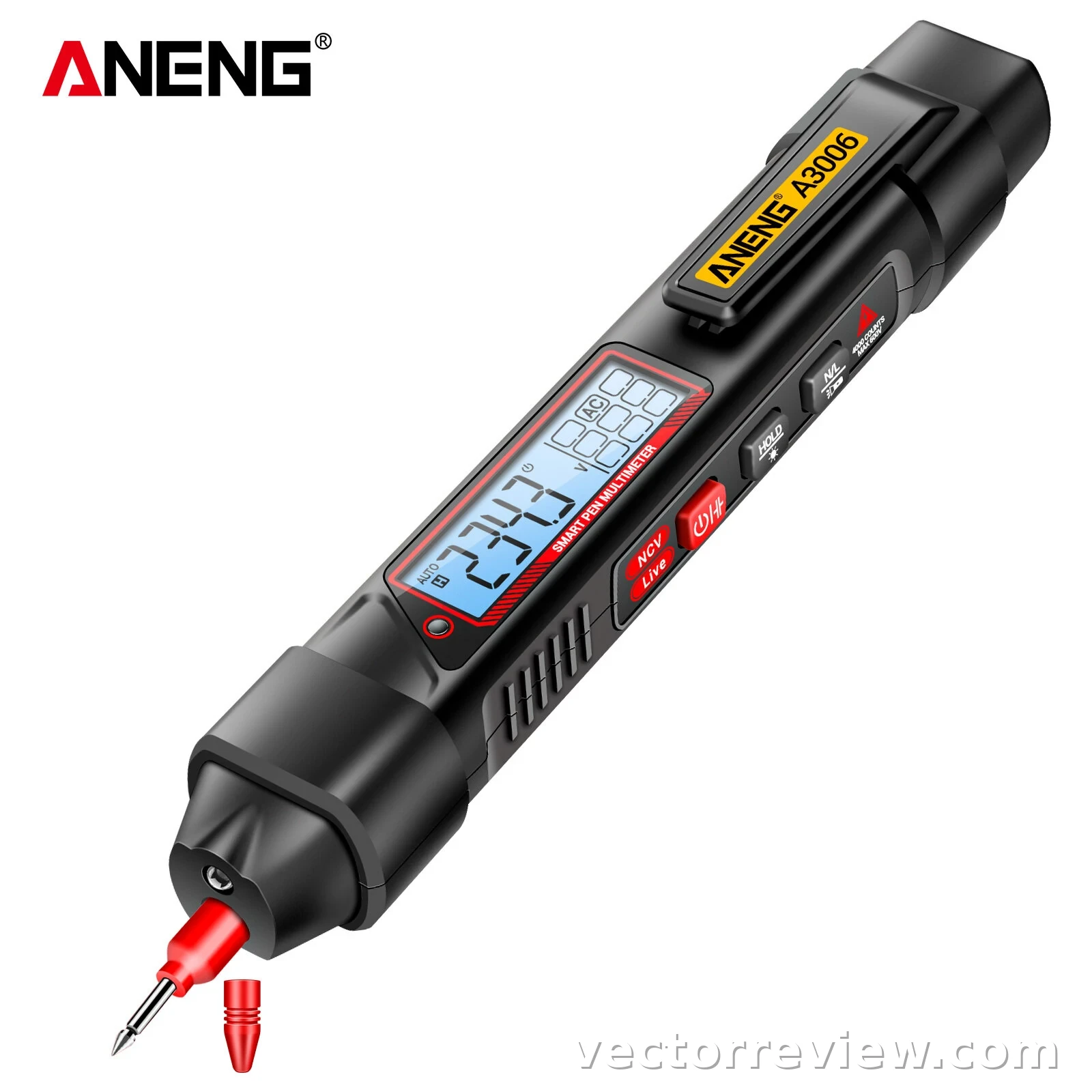
While detailed specifications for the A3006 are less readily available, it is generally considered an upgraded version of the A3005. It typically offers:
- Higher Count: 6000 counts (vs 4000 on A3005)
- Improved Accuracy: Basic DC voltage accuracy of ±0.5% (vs ±0.8% on A3005)
- Additional Features: Phase sequence detection (not available on A3005), temperature measurement with integrated probe, and possibly a rechargeable battery option.
- Display: Inverted multi-color LCD with permanent backlight (similar to the A3008 model)
- Power: Single R3 (AAA) cell, with support for NiMH rechargeables
It is important to note that the A3006 shares many design elements with the A3008, which has been reviewed extensively by users. The A3006 appears to be a middle ground between the A3005 and the more advanced A3008.
Pricing
The ANENG A3005 is widely available at very low prices. For example, promotional offers have listed it for as little as US$7.69 (approximately A$11.79) including shipping and taxes, and with coupons, the price can drop to around US$3.69 for new users. The A3005 Pro may cost slightly more due to additional accessories.
The ANENG A3006 is priced higher, typically in the US$20–30 range, reflecting its upgraded features and higher accuracy. However, exact pricing varies by retailer and region.
Features and Performance
A3005 Performance
User feedback on the A3005 highlights its convenience for basic electrical work. The automatic measurement mode eliminates the need to manually select functions, which speeds up testing. However, some users note that the auto-mode can be slower to respond, particularly for continuity and resistance measurements, with delays of up to a second. The 4000-count display is adequate for general troubleshooting, but not as precise as higher-end models.
The A3005's build quality is generally described as acceptable for the price, though the plastic body may feel less robust than professional-grade tools. The included accessories, especially in the Pro version, add versatility.
A3006 Performance
Based on reviews of similar ANENG pen multimeters (like the A3008), the A3006 is expected to offer faster response times, better accuracy, and a more readable display. The 6000-count resolution provides finer measurement detail. The inverted LCD with permanent backlight is praised for visibility in dark environments but criticized for being difficult to read in direct sunlight. The phase sequence detection is a valuable feature for electricians working with three-phase systems.
Accuracy tests on the A3008 (a close relative) showed voltage readings within 0.1% of a calibrated reference, and resistance measurements within 0.5%. The A3006 likely performs similarly. The integrated temperature probe is convenient, though its accuracy is modest (±1°C).
One notable quirk reported in the A3008 (and potentially the A3006) is the audible relay switching during auto-ranging, which some users find distracting. Additionally, the lack of shielding means the relay can be triggered by an external magnet, though this is unlikely to affect normal use.
User Experiences
Users appreciate the portability and ease of use of both models. The A3005 is often recommended as a budget-friendly option for quick checks around the home, car, or caravan. The A3006 is favored by those who need a bit more precision and features like phase sequence detection, without stepping up to a full-size multimeter.
Common complaints include the slow auto-mode response on the A3005 and the display readability issues on models with inverted LCDs. Battery life is generally good, especially when using rechargeable NiMH cells, which the A3006 supports.
Pros and Cons
ANENG A3005
Pros: - Extremely affordable - Compact and lightweight - Automatic measurement mode - Includes many accessories in Pro version - Good for basic electrical testing
Cons: - Slower response in auto mode - Lower accuracy and resolution (4000 counts) - No phase sequence detection - Build quality is basic
ANENG A3006
Pros: - Higher accuracy and resolution (6000 counts) - Phase sequence detection - Integrated temperature probe - Supports rechargeable batteries - Better display visibility in low light
Cons: - Higher price - Display can be hard to read in direct sunlight - Audible relay clicking - Not as widely available as A3005
Summary
Choosing between the ANENG A3005 and A3006 depends on your needs and budget. The A3005 is an excellent entry-level pen multimeter for hobbyists and homeowners who need a cheap, portable tool for basic voltage, resistance, and continuity checks. Its automatic mode simplifies operation, though it sacrifices some speed and precision.
The A3006, on the other hand, offers improved accuracy, a higher count display, and additional features like phase sequence detection and temperature measurement. It is better suited for users who require more reliable readings and work with three-phase systems. The higher price is justified by these enhancements, but it still remains an affordable option compared to professional-grade meters.
Both models share the convenience of a pen-type design and are backed by ANENG's reputation for budget-friendly test gear. If you need a simple, occasional-use meter, the A3005 is a solid choice. If you want more precision and features without spending a lot, the A3006 is worth the extra cost.


